
Erling Haaland's Early Life and Childhood: Family, Bryne, and Footballing Beginnings
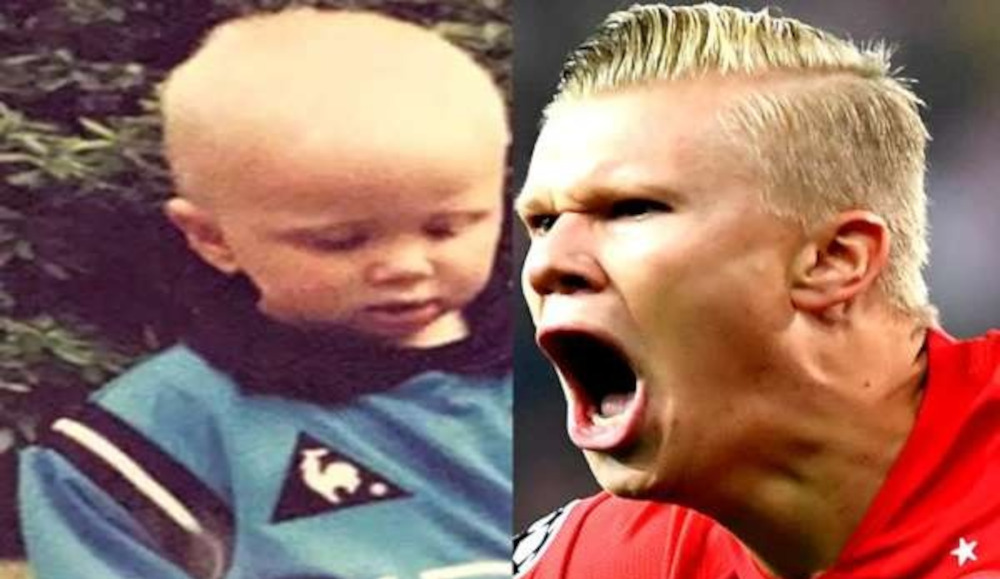
Today, Erling Haaland is one of the most dominant strikers in world football. But his journey did not begin at one of Europe's elite academies. It began in a small town in southwestern Norway.
Haaland was born on July 21, 2000, in Leeds, England, while his father, Alf-Inge Haaland, was playing for Leeds United. Although he was born in England, Haaland returned to Norway with his family at around the age of three, settling in Bryne, his father's hometown. It was in this quiet Norwegian town that Haaland spent his childhood and first developed his love for football at local club Bryne FK.
From playing against older boys to countless hours of informal football indoors and making his senior debut at just 15, Haaland's early years laid the foundations for the world-class striker he would eventually become. Understanding his childhood offers a glimpse into how one of football's most prolific goalscorers was forged from an early age.
A Norwegian Football Family with English Football Roots
Erling Braut Haaland's sporting background runs deep. He grew up in a family with a strong connection to elite sport, and his parents played an important role in shaping his early environment. For a closer look at his family's sporting background and the people behind his development, see Erling Haaland's Family Background: A Sporting Dynasty, Genetics, and the People Behind His Rise.
Father: Professional Footballer Alf-Inge Haaland
Haaland's father, Alf-Inge Haaland, was a Norwegian international who spent his professional career with English clubs including Nottingham Forest, Leeds United, and Manchester City. A midfielder and defender during his playing days, Alf-Inge's career meant that football was part of Haaland's family life from the very beginning.
Mother: Athlete Gry Marita Braut
Haaland's mother, Gry Marita Braut, was a Norwegian heptathlete who competed at a high level in athletics. That combination of football and track-and-field backgrounds may help explain some of the remarkable athletic qualities Haaland would go on to develop, from explosive power to coordination and overall physical ability.
Yet Haaland's success cannot simply be attributed to genetics or natural talent. Coaches who worked with him during his youth have repeatedly highlighted his fierce competitiveness, relentless desire to score, and extraordinary commitment to football from an early age.
Growing Up in Bryne: Where Haaland's Football Journey Began
At around three years old, Haaland moved with his family from Leeds back to Norway and settled in Bryne, a small town in the Jæren region of southwestern Norway. It was a very different environment from the major European cities where he would later make his name, such as Manchester and Dortmund. Bryne was a quiet community surrounded by farmland, where football was woven into everyday life.
For a young Haaland, Bryne did not offer the world-class training facilities he would eventually have access to. What it did offer was something equally valuable: space to play.
After school, Haaland and his friends spent hours playing football, competing, shooting, and simply figuring out the game for themselves. That kind of informal football, without the constant structure of organized training, encouraged him to read the game, make his own decisions, and learn through repetition.
Jærhallen: A Childhood Football Haven
Because Norway's cold and rainy weather often made outdoor football difficult, Jærhallen, an indoor football facility in Bryne, became an important part of Haaland's childhood.
Haaland regularly played informal games there with friends. These games were fundamentally different from structured club training:
- No coach directing every move: Players had to solve problems and make decisions for themselves.
- Mixed ages and abilities: Playing against older and more experienced children forced Haaland to react quickly and adapt.
- Constant involvement: Informal games gave him countless opportunities to touch the ball, shoot, receive passes, and make decisions under pressure.
This combination of structured youth coaching and large amounts of free play played an important role in Haaland's early football development.
Youth Football: Learning to Compete Against Older Players
As Haaland grew older, he formally joined the youth setup at his hometown club, Bryne FK. One of the defining features of his early development was that he regularly trained and played against players who were older than him.
One of his youth coaches, Alf-Inge Berntsen, later recalled that although Haaland was born in 2000, he spent part of his youth development in a training group made up largely of players born in 1999. That meant Haaland was often competing against boys who had an age and physical advantage over him.
Technique and Awareness Before Physical Power
The Haaland we know today stands well over 1.9 meters tall and possesses extraordinary speed, strength, and explosiveness. But as a young player in Bryne, he was comparatively slight and did not have the overwhelming physical advantages that would later become such a defining part of his game.
He therefore had to rely more heavily on:
- Intelligent movement
- Sharp spatial awareness
- Quick decision-making
- Clinical finishing
- An intense competitive drive
His youth coaches particularly noticed how much attention Haaland paid to positioning and movement. Even at a young age, he was already thinking about where he needed to be and how he could move into better positions to create scoring opportunities.
That early awareness has clear echoes in the player he would eventually become. Today, one of Haaland's greatest strengths is his ability to make sudden runs into space and attack the area behind defenders. For a deeper tactical breakdown of his game, see Erling Haaland's Playing Style: How He Redefined the Modern Center-Forward.
An Obsession With Scoring
Haaland's coaches also recalled how strongly he reacted when he missed chances he believed he should have scored. His frustration could be intense, but it also revealed something that would remain central to his career: an almost obsessive desire to score.
That competitive edge was present long before Haaland became a global superstar.
A Breakout in Reserve Football and His Senior Debut
As Haaland progressed through Bryne's youth system, his goalscoring ability became increasingly difficult to ignore.
Reserve Team: 18 Goals in 14 Games
In the 2015 reserve league campaign, Haaland scored 18 goals in 14 appearances at just 14 or 15 years old.
His extraordinary scoring rate quickly began attracting attention within Norwegian football and hinted at the goalscoring talent that would later take him to the top of the game.
Senior Debut at 15
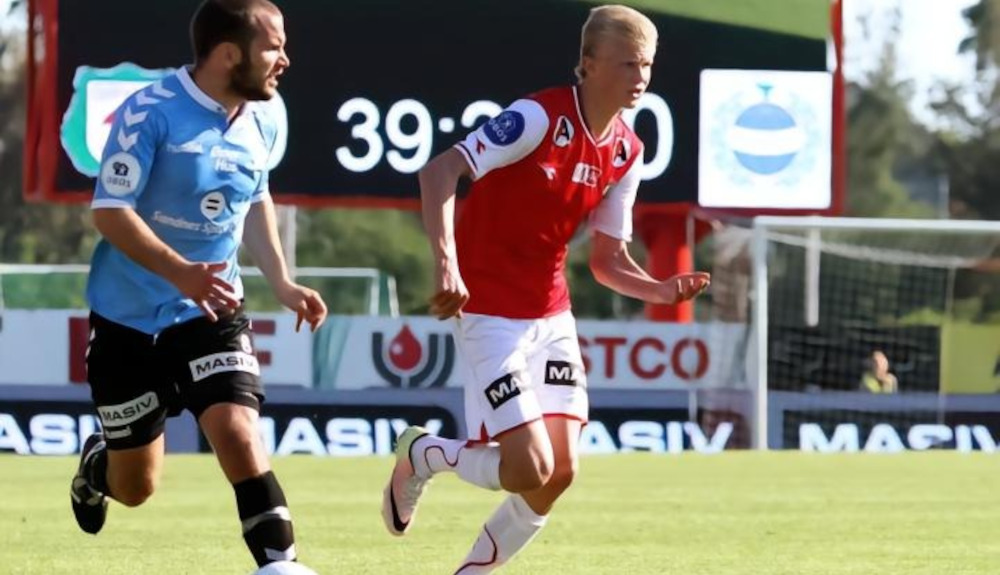
In May 2016, Haaland made his senior debut for Bryne FK before his 16th birthday. He was just 15 years old.
Bryne were competing in Norway's second tier, the OBOS-ligaen, meaning Haaland was suddenly facing fully grown professionals with greater physical strength, experience, and tactical maturity.
16 Appearances, 0 Goals: His First Lesson in Professional Football
The transition from youth football to the senior game was not easy.
Although Haaland had already established himself as a prolific scorer at youth and reserve level, he failed to score in 16 appearances for Bryne's first team. For the full story of this early chapter, see Erling Haaland's Bryne FK Career: Senior Debut, 16 Games Without a Goal, and Early Development.
That difficult spell was an important part of his development. It showed that his professional career was not a straight line of goals, records, and success. Like almost every young player, he had to learn how to adapt to the senior game:
- Deal with stronger and more physical opponents
- Adjust to a faster pace of play
- Find solutions against more experienced defensive systems
At the time, Haaland had not yet developed the imposing physical presence that would later become one of his greatest weapons. He therefore had to learn how to use his technique, movement, and footballing intelligence more effectively against stronger opposition.
The experience taught him an important lesson: success in youth football does not automatically translate into immediate success at senior level.
Leaving Bryne: The Road to Molde and European Football
Haaland's time with Bryne's first team was relatively brief. After making his senior debut in 2016, he joined Molde FK in February 2017 at the age of just 16. For more on this crucial next step in his development, see Erling Haaland's Molde Career: Solskjær's Influence and His Early Transformation.
The move marked a major turning point in Haaland's career. At Molde, he worked under Ole Gunnar Solskjær, who would have a significant influence on his development.
Solskjær was a former striker himself and a Manchester United legend, best remembered for his role as the club's iconic "super-sub." His experience as a forward gave him valuable insight into the attacking side of the game, helping the young Haaland continue to refine his movement, finishing, and attacking instincts.
At Molde, Haaland began turning the goalscoring ability he had shown at Bryne into consistent production at senior level. At the same time, his body was beginning to change dramatically. As he grew taller, stronger, and faster, his physical advantages became increasingly difficult for defenders to handle.
The combination was becoming formidable: the movement, spatial awareness, and instinctive finishing he had developed as a child were now being paired with rapidly improving physical power.
The next step would take him beyond Norway.
In August 2018, Red Bull Salzburg announced the signing of Haaland, with the move officially completed in January 2019. It marked the beginning of a new chapter and his emergence onto the European stage.
But before the Champions League goals, Bundesliga records, and Premier League titles, there was one place that mattered above all: Bryne.
This small Norwegian town was where Haaland first learned how to play, compete, find space, and understand the game.
FAQ: Erling Haaland's Early Life and Childhood
Where was Erling Haaland born?
Erling Haaland was born in Leeds, England, on July 21, 2000, while his father, Alf-Inge Haaland, was playing for Leeds United.
Where did Haaland grow up?
Haaland grew up primarily in Bryne, Norway. He moved back to Norway with his family at around the age of three and spent his childhood in his father's hometown.
What is Erling Haaland's family background?
Haaland's father, Alf-Inge Haaland, was a professional footballer who played for English clubs including Nottingham Forest, Leeds United, and Manchester City, as well as the Norway national team. His mother, Gry Marita Braut, was a Norwegian athlete who competed in the heptathlon.
When did Haaland join Bryne FK?
Haaland joined his hometown club, Bryne FK, as a child and progressed through its youth system before making his senior debut in 2016.
How old was Haaland when he made his senior debut?
Haaland made his senior debut for Bryne FK in May 2016, at just 15 years old, less than two months before his 16th birthday.
Did Haaland score for Bryne's first team?
No. Haaland made 16 appearances for Bryne's first team without scoring. Before that, however, he had scored 18 goals in 14 reserve-team appearances.
When did Haaland join Molde?
Haaland left Bryne and joined Molde FK in February 2017, when he was just 16.
Was Haaland physically dominant as a child?
Not particularly. During his early youth years at Bryne, Haaland was relatively slight and did not possess the overwhelming physical advantages he would develop later. His physical transformation came during his teenage years, which meant he had to learn early on how to use technique, movement, and spatial awareness to compensate for his lack of physical strength.
Conclusion: From a Small Norwegian Town to the Top of World Football
Erling Haaland's childhood is an important piece of the puzzle when it comes to understanding the development of one of the world's most dominant strikers.
He was born in England into a family with a strong sporting background, but it was the small Norwegian town of Bryne that truly shaped his early football education. There, he regularly played against older children, spent countless hours playing informal football indoors, and gradually developed a sharp understanding of movement, space, and goalscoring.
Perhaps most importantly, Haaland began learning how to create opportunities through positioning, movement, and anticipation before his physical gifts had fully developed.
His youth development eventually led to a senior debut at 15 and a move to Molde at 16, setting him on the path toward the highest levels of European football.
Bryne was only the beginning of Haaland's professional journey. But many of the qualities that would later define him — his movement, spatial awareness, relentless desire to score, and fierce competitive mentality — were already beginning to emerge during his childhood and teenage years.
📚 Further Reading: Explore Haaland's Early Career
If you want to explore more of Haaland's rise from promising youngster to global superstar, check out these related articles:
-
🧬 Erling Haaland's Family Background: A Sporting Dynasty, Genetics, and the People Behind His Rise
-
⚽ Erling Haaland's Bryne FK Career: Senior Debut, 16 Games Without a Goal, and Early Development
-
🇳🇴 Erling Haaland's Molde FK Career: Solskjær's Influence and His Early Transformation
Note: This article is based on publicly available data and reports published through August 2026.